Battery Analyzer
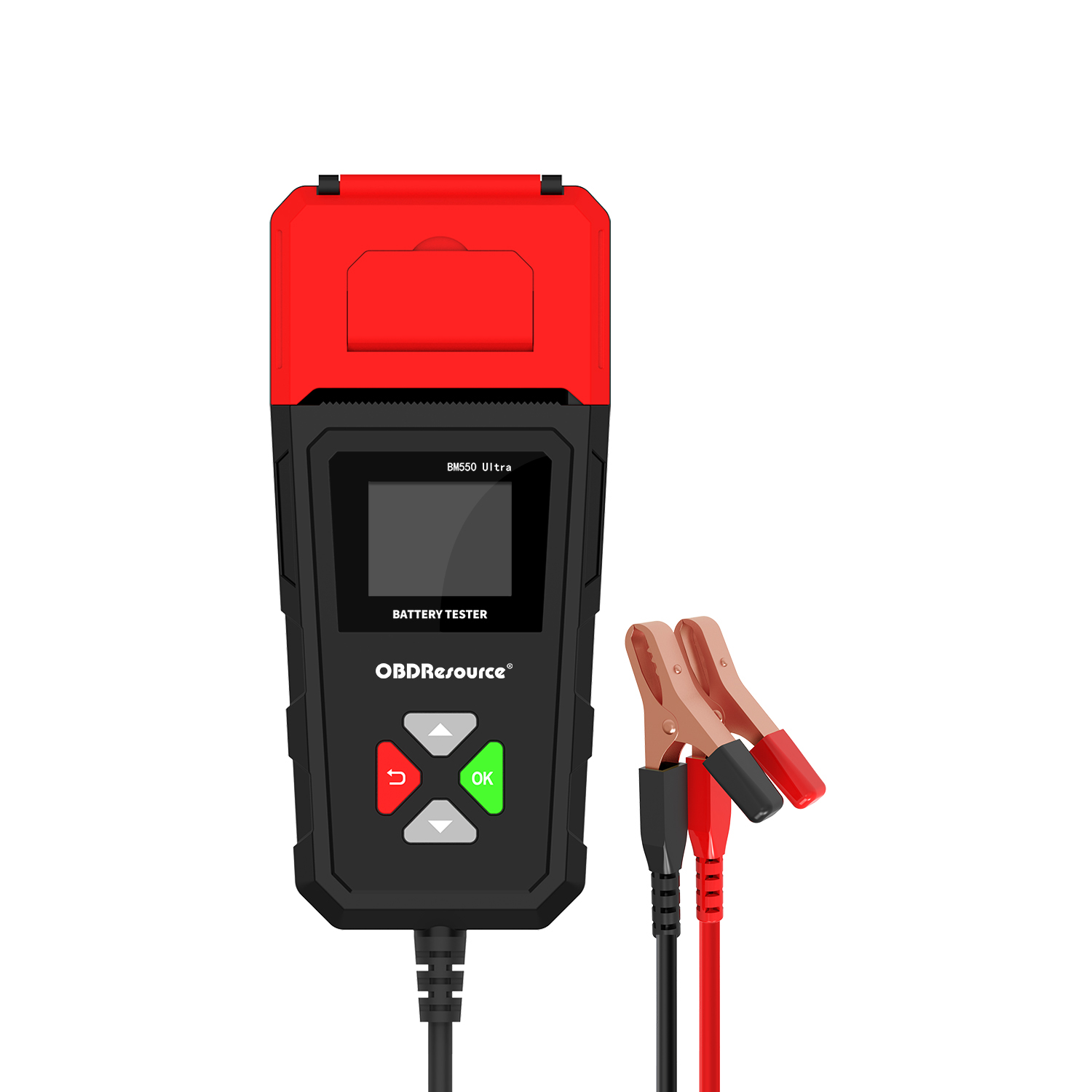
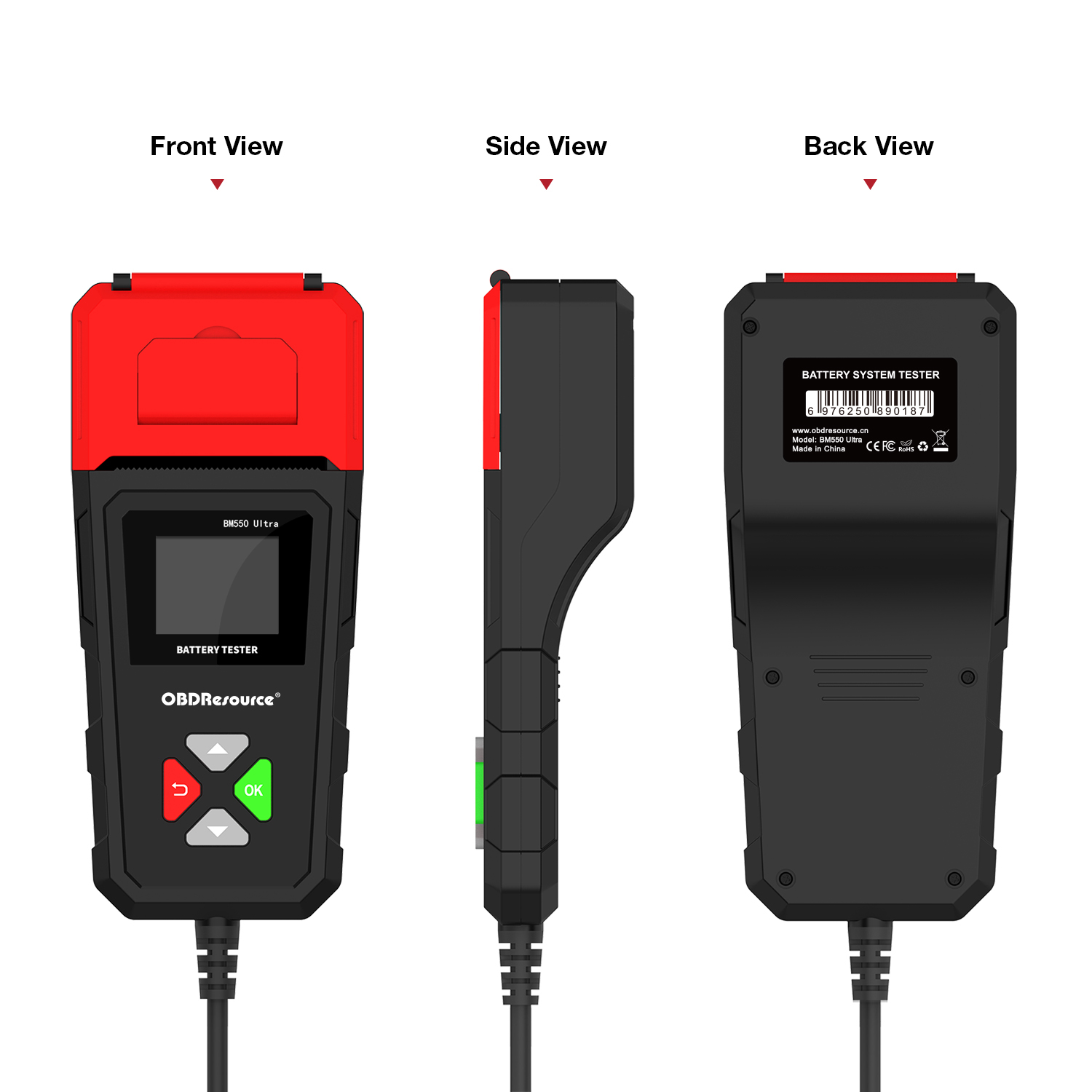
BM550U(BM550 Ultra) Battery Analyzer with Thermal Printer
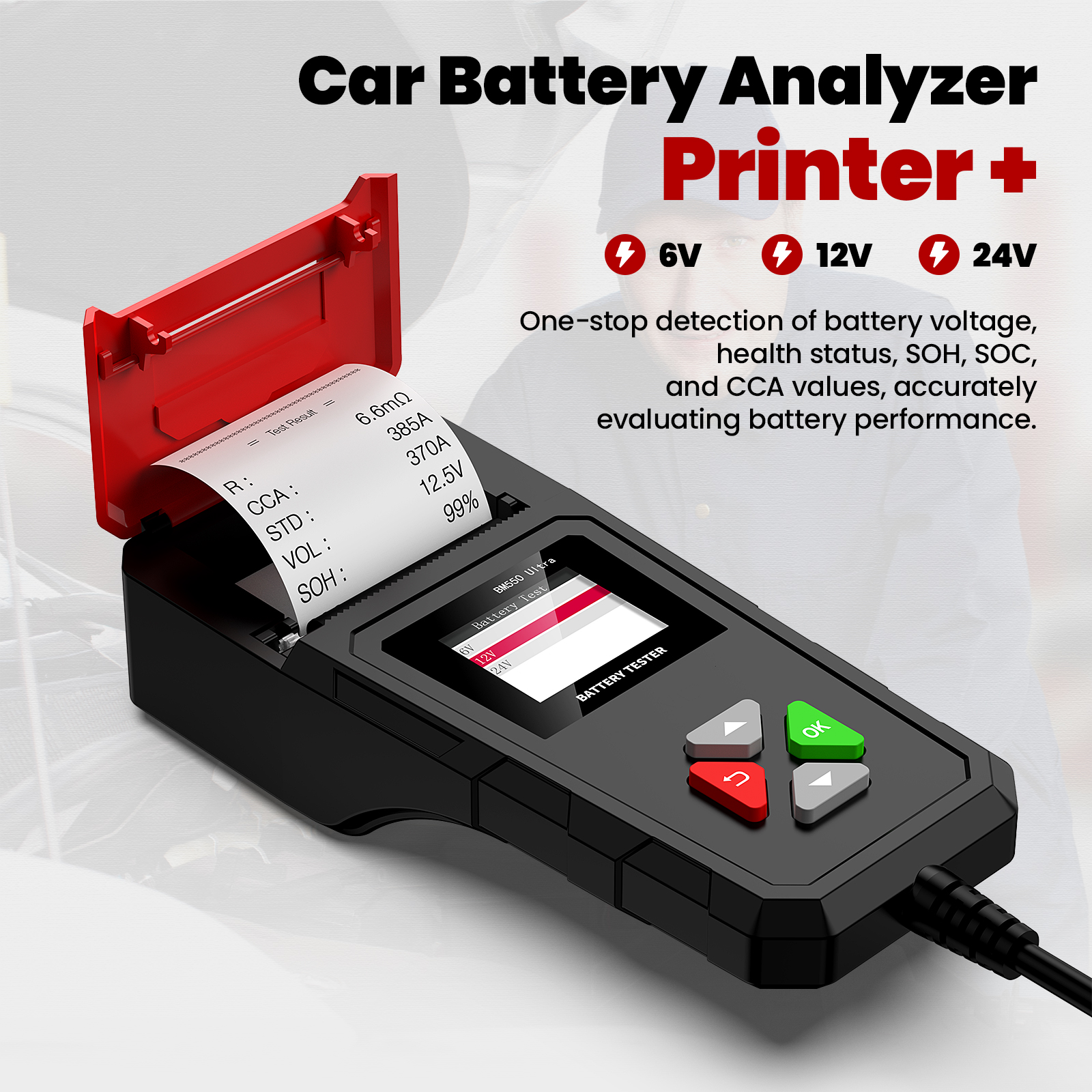
Analyze compatible 6/12/24 V lead-acid batteries with CCA, SOH, SOC, resistance and voltage results on a 1.8-inch color display. Built-in printing supports paper reports.
Product overview
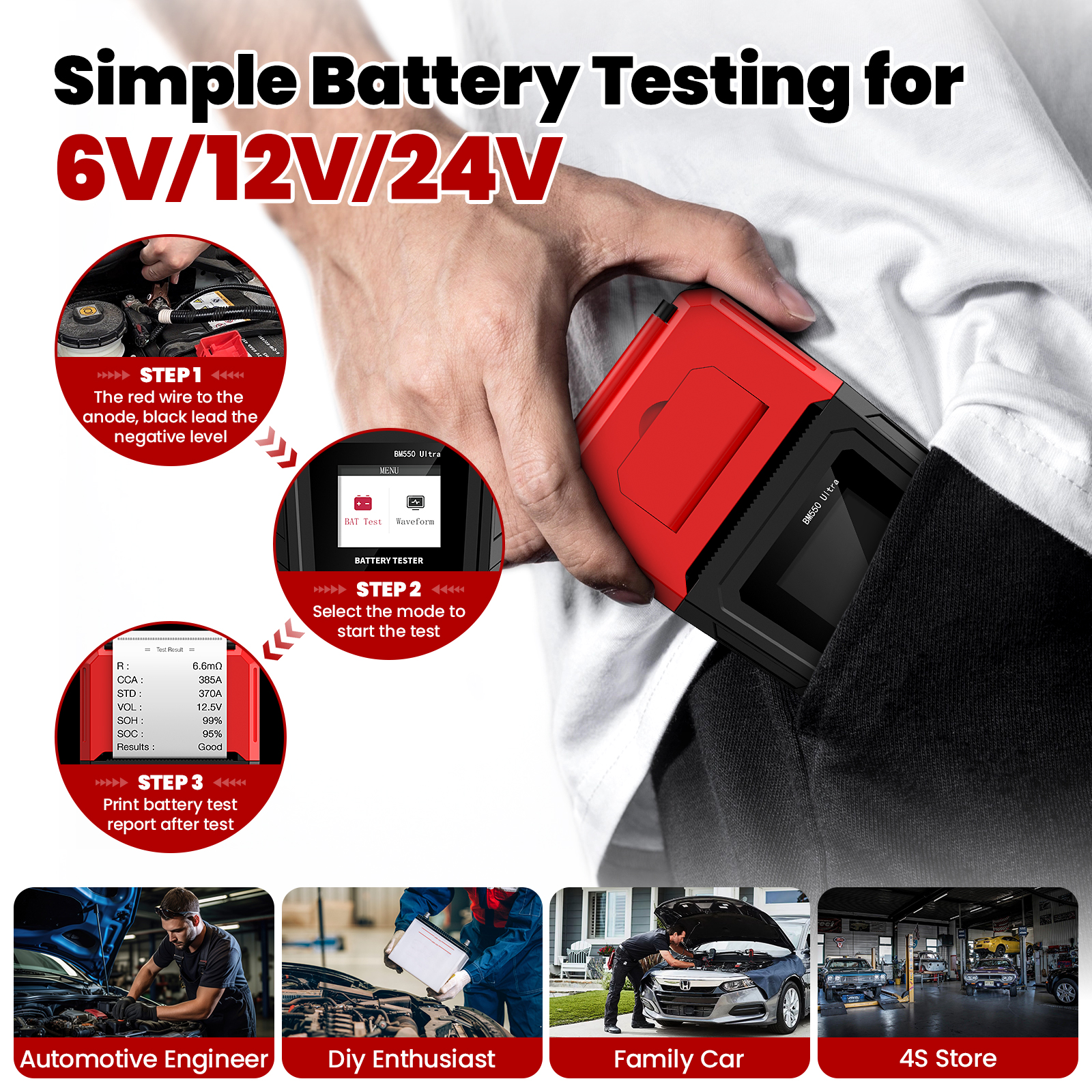
The BM550U analyzes compatible 6/12/24 V lead-acid starting batteries through terminal connections, providing CCA, SOH, SOC, resistance and voltage information. Enter the battery’s correct rated value and maintain good clamp contact for comparable results. Analysis supports maintenance decisions; it does not directly measure remaining Ah capacity or predict exact service life.
Key capabilities
Multi-metric battery analysis
Review CCA, State of Health (SOH), State of Charge (SOC), resistance and voltage together. SOC and SOH are algorithmic estimates; do not base replacement solely on one percentage.
Test against the rated value
Supports Flooded, AGM flat-plate, AGM spiral and GEL lead-acid batteries. Match voltage and rating to the battery label and device menu. 100–2000 CCA is the CCA test range; do not mix rating standards.
Clear review and records
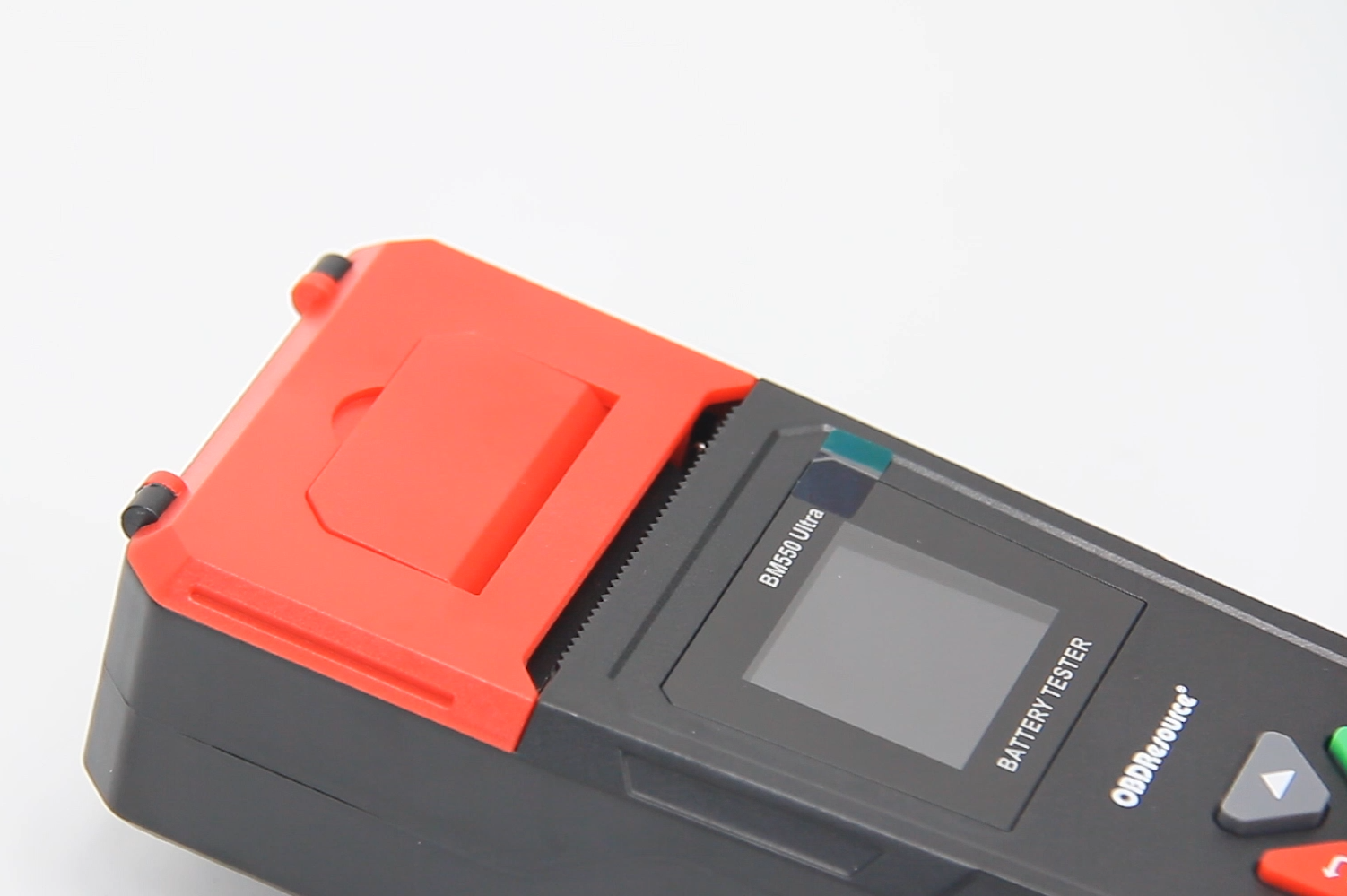
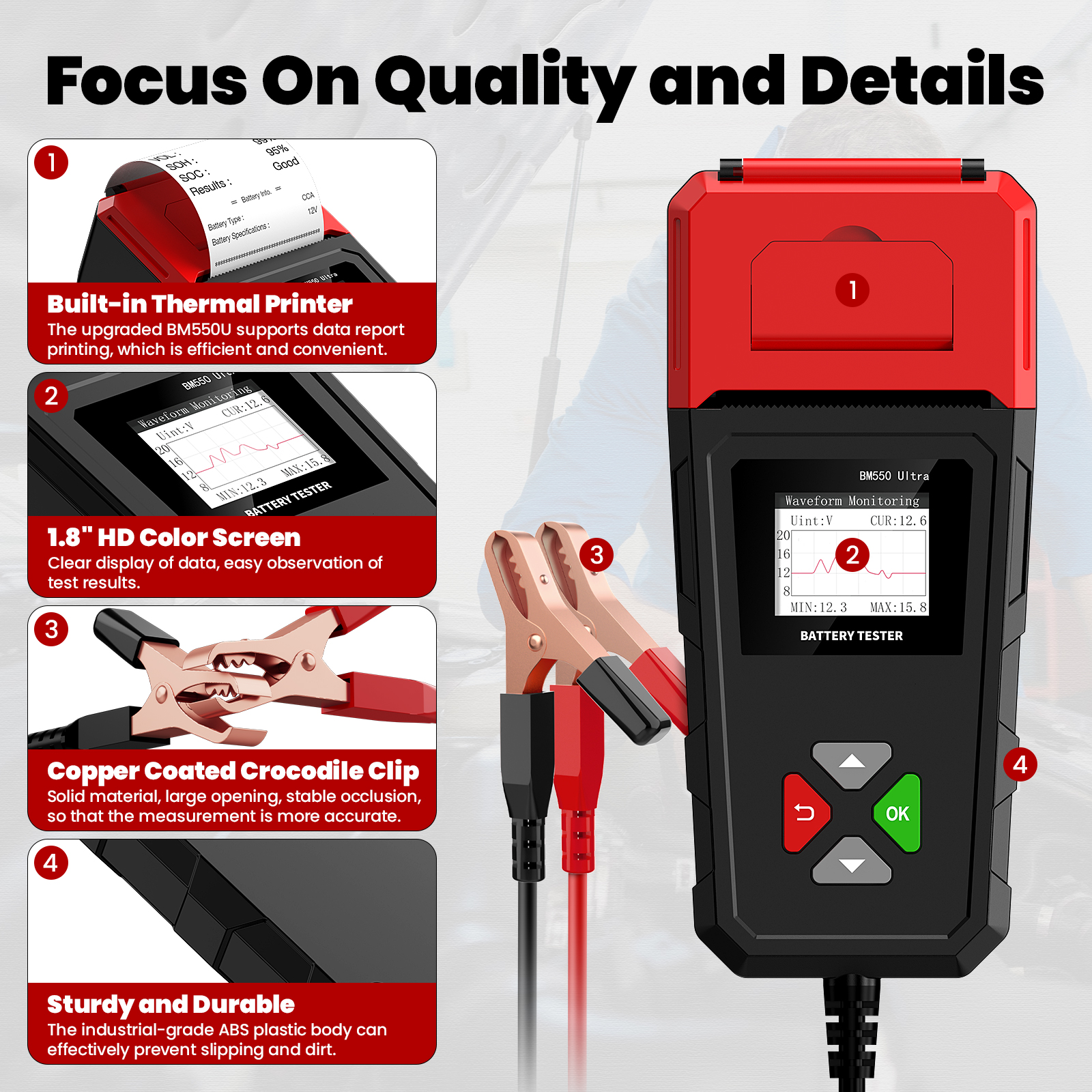
A 1.8-inch color display presents results. The built-in printer creates test reports for service records and customer discussions.
Voltage waveform and conversion
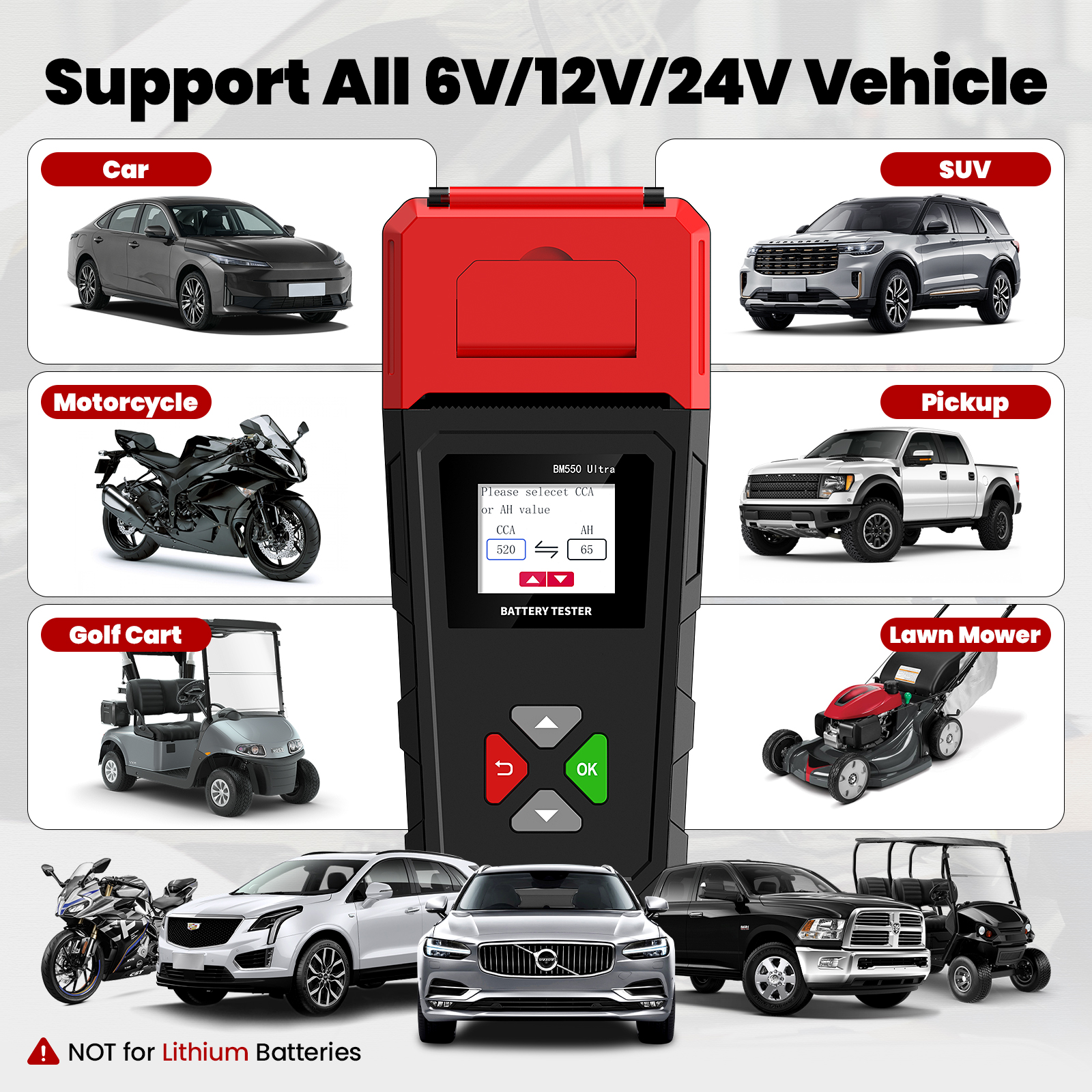
The waveform page tracks voltage changes over time. Automatic proportional CCA/Ah conversion supports rating input and analysis; it is not capacity measured by a controlled discharge test.
Suggested workflow
Check the battery and conditions — Verify voltage, type and rating standard; prepare the battery and handle surface charge as instructed.
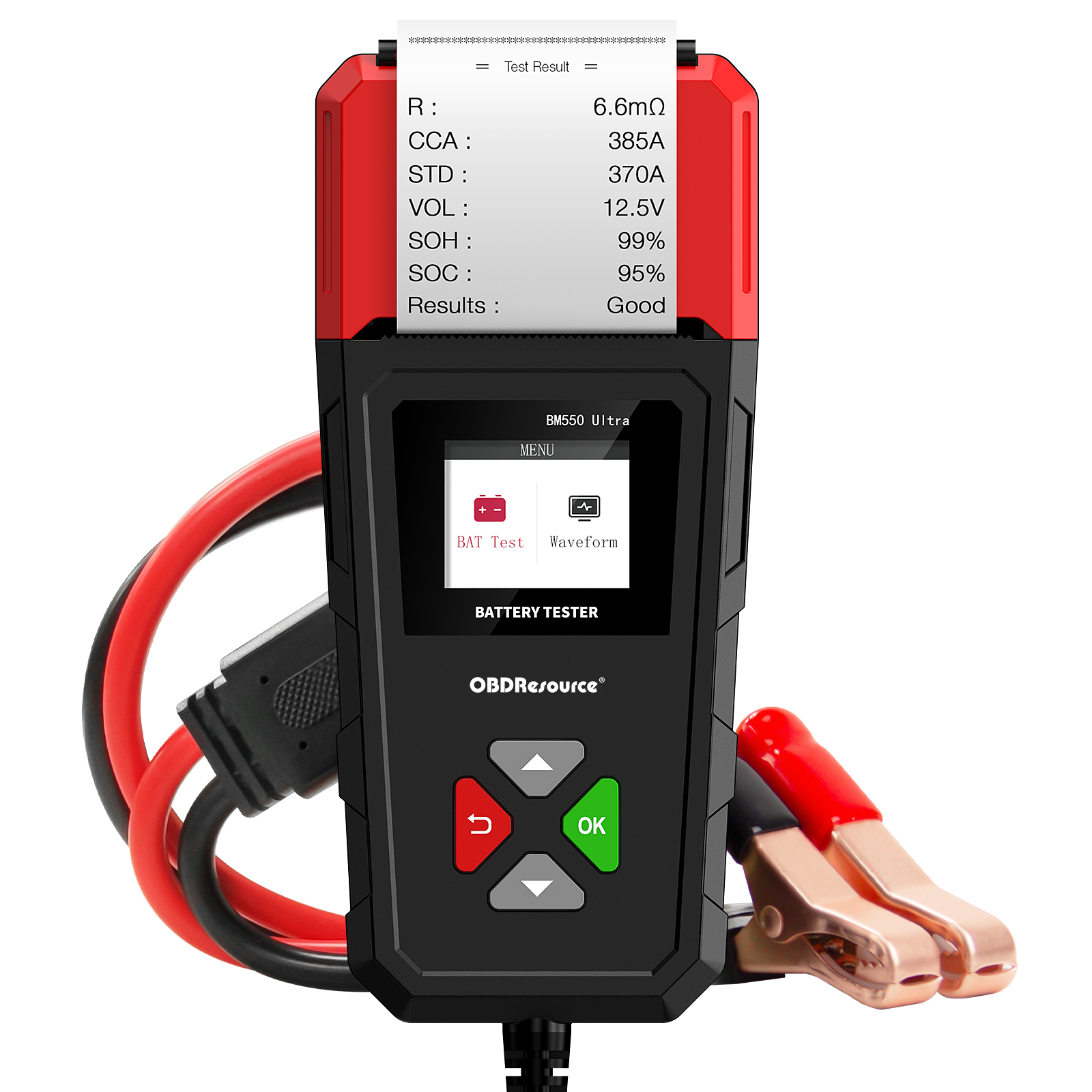
Connect and enter the rating — Connect red positive and black negative to clean terminals with secure contact. Select the correct settings and enter the nameplate rating; do not guess CCA.
Interpret and recheck — Interpret voltage, SOH and SOC alongside symptoms. If undercharged, recharge and rest as instructed before retesting; retain service records.
Frequently asked questions
How do SOH, SOC and actual Ah capacity differ?
SOH estimates health and SOC estimates charge state. Neither directly measures actual Ah capacity, which requires controlled charge/discharge testing under the relevant standard.
Can it test lithium batteries or traction packs?
The listed application is lead-acid batteries within the stated voltage and type limits. Do not extend this to lithium, high-voltage traction packs or unlisted chemistries.
Why can results change on the same battery?
Clamp contact, corrosion, temperature, surface charge, vehicle loads and entered ratings affect results. Standardize conditions before comparing repeated tests.
What if the printout is blank or faint?
Check compatible thermal paper, coated-side orientation, loading and the power requirements in the manual. Follow the instructions for clearing the paper path.
Product design
Documentation and support
Key features
Applications
Technical specifications
| Item | Specification or function |
|---|---|
| Model | BM550U |
| Nominal battery voltages | 6/12/24 V |
| Battery types | Flooded, AGM flat-plate, AGM spiral and GEL lead-acid batteries |
| CCA range | 100–2000 CCA |
| Analysis metrics | CCA / SOH / SOC / resistance R / voltage V |
| Display | 1.8-inch color |
| Test connection | Positive/negative alligator clamps |
| Use | In-vehicle / out-of-vehicle under manual conditions |
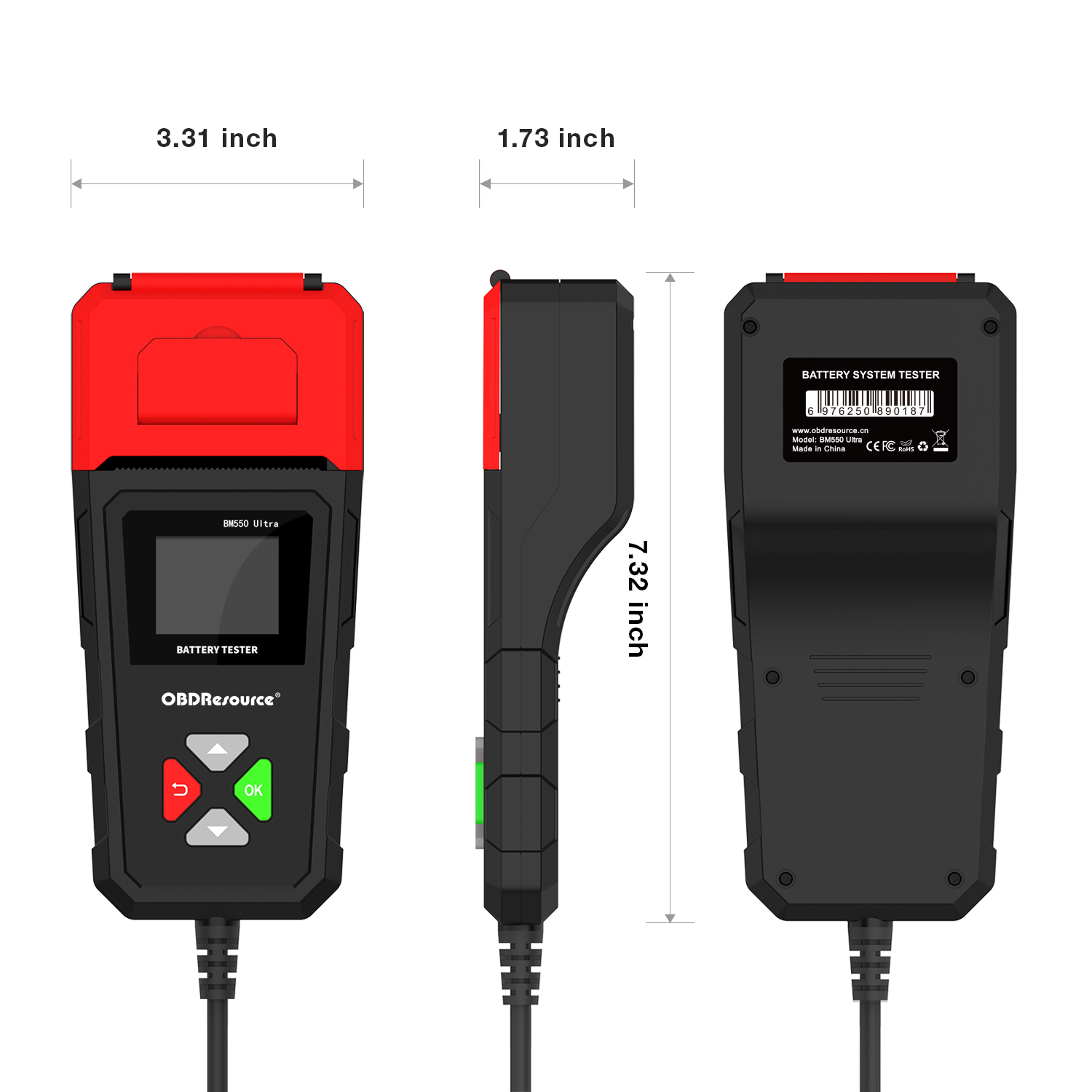
| Body dimensions | 186 × 84 × 44 mm |
| Operating input voltage | 4.9–32 V |
| Operating temperature | −20°C to 50°C |
| Printing | Built-in printer; use compatible paper per manual |
| Voltage waveform | Real-time voltage graph |
| Rating conversion | Proportional CCA/Ah conversion, not actual Ah capacity measurement |
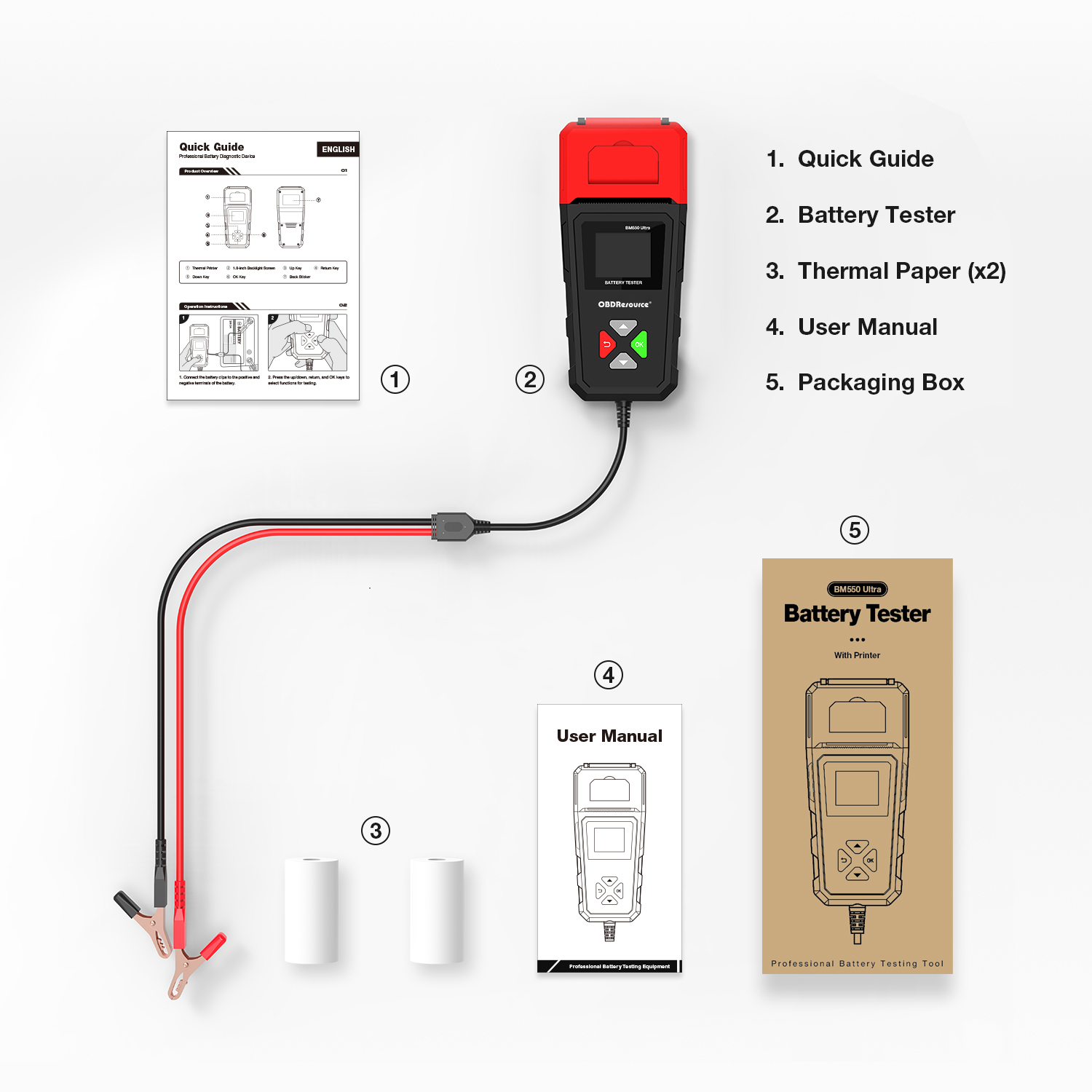
| Printer paper | 57 mm-wide thermal paper; check roll dimensions in manual |
| Protection and prompts | Reverse-polarity/overload protection and poor-contact prompt |
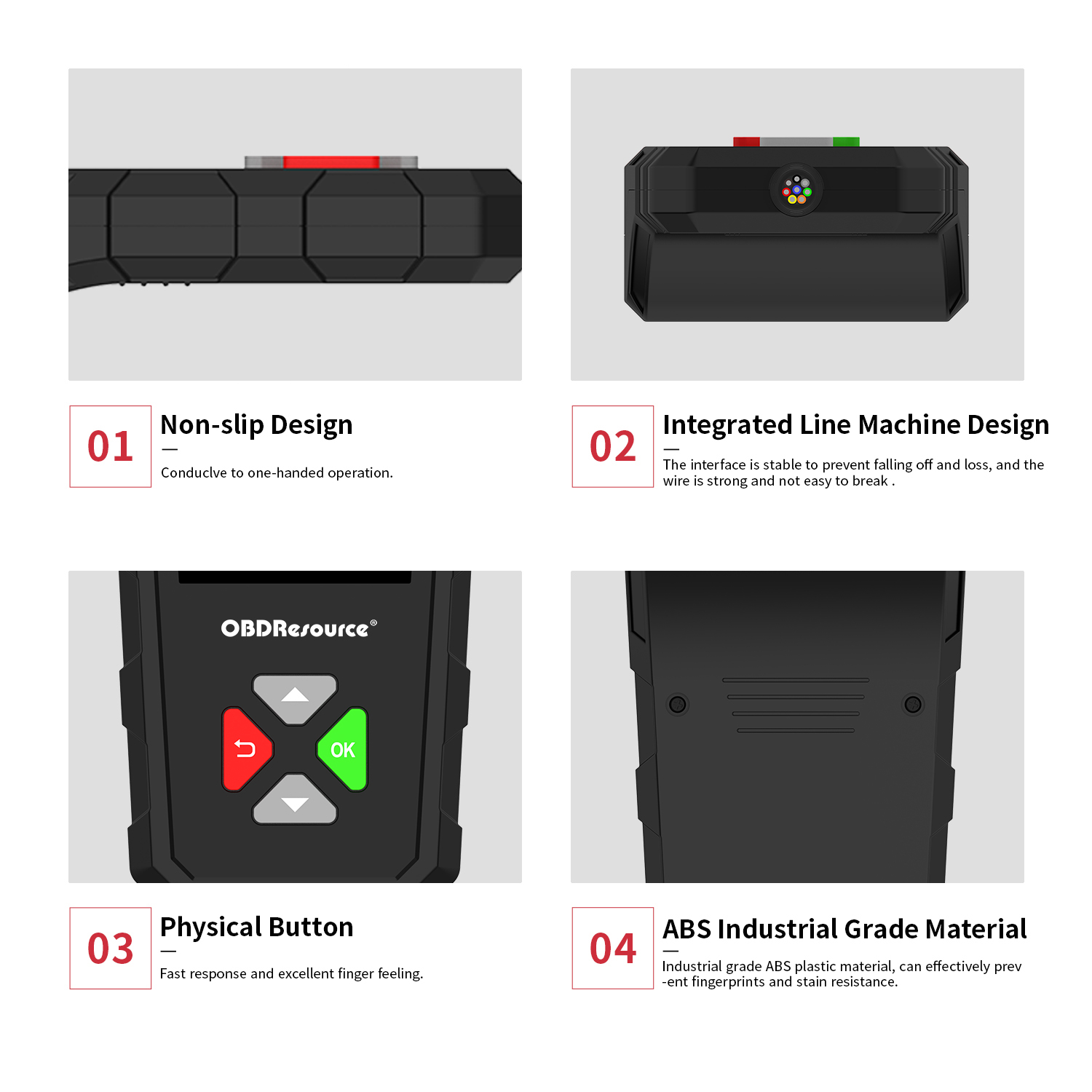
| Housing material | ABS |
SOH, SOC and CCA analysis supports maintenance; it does not guarantee actual Ah capacity or remaining service life. Use good contact, correct ratings and proper test conditions.
OBDRESOURCE